Alumni
Before he ever stepped into a law school classroom as a student, Professor Mark Niles was already captivated by legal education. His mother attended law school while he was in junior high, and Niles asked to sit in on one of her classes: Criminal Procedure.
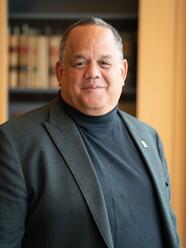
“I was hooked,” he said.
That early fascination with the law, combined with a longstanding interest in teaching, shaped the path that ultimately brought Niles to USF, where he joined the faculty this past summer.
Niles’ scholarship focuses on the balance of power between state and federal governments, including current research examining how political and racial gerrymandering undermine democratic accountability in local, state, and federal legislatures.
At the center of his work, however, is teaching.
“I focus on helping students understand that, as lawyers, their job will be to advocate for their client’s interests,” Niles said. "The best way to be an effective advocate is to understand legal analysis and how to use it to achieve your client’s goals.”
Niles teaches Civil Procedure, a foundational first-year course that he believes students often underestimate.
“There’s a misconception that Civil Procedure is boring,” he said. “It is actually a fascinating subject that involves a wide range of ideas and strategies that are central to the work of lawyers.”
Students in Niles’ classroom can expect a traditional Socratic approach delivered with intentionality and care. While he values rigor and engagement, he is equally committed to creating an environment where students feel supported as they build confidence and analytical skills.
“I do my best to make the classroom as humane and non-stressful as possible,” he said. “I am very committed to making sure students understand what they need to know from the course and that they are prepared for what to expect on exams and other assessment models.”
That student-centered philosophy made USF Law a natural fit.
“I love that USF has one of the most diverse student bodies of any law school in the country,” Niles said. “I have always loved teaching different kinds of students from different backgrounds and with different perspectives.”
He hopes students leave his classroom not only with a strong foundation in legal analysis, but also with a broader sense of possibility about their futures in the profession.
“I hope that I have given students of color, and all students, a sense that they can do whatever they want to with their legal degree,” he said.