Passion for Justice

Every afternoon after school, Kandis Westmore walked to Vala Bovie’s School of Classical Ballet in Berkeley. She had been going there since she was 4. By the time she was 9, she made the walk alone.
“Madame Bovie would not let you slouch,” Westmore says. “Chin up. Shoulders back. She had such a strong impact on my life that I could hear her voice in my head when I was not even with her. If I was walking down the street and caught myself slouching, I would stand up.”
Those early lessons taught discipline and the importance of carrying yourself with purpose, Westmore says. Years later, those same qualities would help her navigate law school, motherhood, and eventually a seat on the federal bench. They would also shape the way she views her role as a judge: not simply to decide cases, but to recognize potential in others.
Her mother earned a bachelor’s degree, then a master’s in public health, then a law degree from UC Berkeley, raising Westmore alone. As a teenager, watching her mother buried under stacks of law books, Westmore decided law was not for her. In the local legal community, she was known as Kittye Beasley’s daughter. Years later, when Westmore announced she planned to apply to law school, her mother laughed. Now her mother is proud to be called Judge Westmore’s mother.
Westmore went to law school at night while raising two young children and working full-time at UC Berkeley. Berkeley’s law school discouraged first-year students from working, she says. USF’s evening program allowed students to keep their jobs. Two of her mother’s friends — lawyers Saundra Brown Armstrong ’77 and Martin Jenkins ’80 — had been part of Westmore’s life since childhood. Her mother had worked with both at the Alameda County District Attorney’s Office. Armstrong later became a U.S. district judge for the Northern District of California. Jenkins later served as an associate justice of the California Supreme Court. “I knew Judge Armstrong went to USF, so it had to be a good school,” Westmore says.
At UC Berkeley, where she was an undergraduate, Westmore says she often felt anonymous among 33,000 students. At USF Law, professors knew her by name. She moved through the program alongside classmates who were balancing jobs, children, and commutes.
It's kind of a blur, it was so hard,” she says. “You just get hyperfocused. Get through it. Make it happen.”
In her final semester, Westmore landed a judicial externship in Judge Armstrong's chambers. Armstrong offered her the position when Westmore wasn’t sure she was ready, worried her writing wasn’t strong enough.
“‘I don’t expect you to come to my chambers and produce work that I’m going to put out there,’” Westmore recalls Armstrong saying. “‘I expect you to come and learn as much as you possibly can. This is for you. This is not for me.’”
With every legal brief after that, Westmore says, “I asked myself if Judge Armstrong would approve. If the answer was no, I kept working.”
After graduation, Westmore worked briefly as a plaintiff’s attorney, then joined the Oakland City Attorney’s Office. It was there, she says, that she understood for the first time that law was what she was supposed to do.
In 2012, she was appointed a magistrate judge for the Northern District of California. Before she applied, however, she sought advice from Justice Jenkins.
“He said: ‘You are right for that, and I’m surprised you haven’t already submitted your application,” she recalls. And then he said, ‘It is already written.’”
That affirmation from Jenkins “shattered all my insecurities,” she says. “Whether I was good enough, whether my writing was good enough, whether I had what it took. He filled all those spaces inside of me that carried doubt. He spoke that truth to me, and it became my truth.”
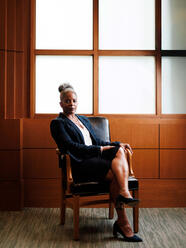
For the first few years, court staff, litigants in cases, and lawyers told her that she didn’t look like a judge. “The image that comes into your mind when you say ‘federal judge’ is not me,” she says. As the only African American magistrate judge in the district, she understands the significance of representation. “When women and minorities come into my courtroom, you can see them light up.”
She also knows what it feels like to be overlooked. She is careful not to name names or describe specific incidents, but she says invisibility is real. “Now I've seen it so many times, I almost watch it like a movie when it’s happening,” she says. “Oh, here’s this cloak of invisibility. I’m invisible at this moment. I’m recognizing it.” These experiences sharpened her awareness of how powerful it can be when someone is truly seen. It is part of the reason she teaches at USF Law and actively seeks out student externs who might not apply because they doubt themselves.
"I don't want just the top 10 percent," she says. "They can extern anywhere. I want people who may not be in the top 10, because of whatever their life experiences may have been.”
In her courtroom, everyone knows the judge is in charge. “There is no need to say so — and no need to speak to anyone in a hostile or condescending manner. It is simply not necessary,” she says. She carries the same thinking into her work with the Conviction Alternatives Program, or CAP.
“Are we making our communities safer by incarcerating every single defendant who appears in front of us?” she asks. “Does incarceration produce law-abiding citizens? Generally, no.” CAP, which she co-leads in the Oakland division of the Northern District of California with U.S. District Judge Haywood Gilliam, serves defendants who have pled guilty to federal charges and who struggle with substance use disorders, untreated trauma, or both. Participants who complete the program, which lasts 12 to 18 months, can be sentenced to supervised release or probation rather than prison. Every two weeks, they appear before a team — two judges, a prosecutor, a public defender, a pretrial services officer, a clinician — and talk about their lives.
“When people go to prison, they don’t address their substance use problem,” Westmore says. “They use drugs in prison, so they come out just as bad, if not worse, than when they went in. They get out and go straight back to the same place, with the same people, doing the same things. Doing the same thing and expecting a different result — that’s insanity. And that’s what we’ve been doing for years and years.”
When participants complete the program, there is a graduation ceremony. Judges, prosecutors, public defenders, clinicians and court staff gather, along with families who have lived through addiction, crime, and incarceration. Westmore and Gilliam speak about each graduate by name, and each graduate speaks in turn. Their names are engraved on a plaque in the courthouse. One CAP graduate comes back every year to the graduations and alumni gatherings. She was one of the hardest cases the program had seen, Westmore says. “Said she had a degree that she never had. Said she had jobs that she never had. It was pathological.” After addressing her substance use, receiving cognitive behavioral therapy, and attending CAP court for a year, the woman went back to school and earned a degree. “She accomplished all the things she had been lying about accomplishing.”
At the end of her time in the program, the participant stood up and spoke directly to Westmore and Gilliam. Westmore recalls what she said: “A generational cycle is being broken through me. It’s been a family pattern — the kinds of things that I’ve done, and the kinds of things that I’ve gone through. And now my life is different, and my children’s lives are going to be different.” Westmore pauses when she tells the story. She sits up straight. Then: “Nobody can tell me CAP doesn’t work. I’ve got 10 years of doing it and seeing it with my own eyes.”