Frank C. Newman International Human Rights Law Clinic
Become a leader in human rights advocacy. At the International Human Rights Clinic, you’ll work on high-impact campaigns that advance justice at the international level, from UN treaty bodies to special rapporteurs and regional mechanisms.
You’ll collaborate directly with international NGO partners and refugee-led organizations to design and implement strategic advocacy that addresses systemic human rights abuses. Through this work, you’ll develop vital skills for your career, including:
- Interviewing survivors and experts; gathering declarations for international complaints.
- Strategic planning, case development, and trauma-informed lawyering.
- Legal research, writing, and advocacy before UN treaty bodies, special rapporteurs, and working groups.
- Building campaigns and fostering meaningful collaboration to execute multi-faceted advocacy strategies.
- Fact investigation, report writing, and advocacy in local and international forums.
- Reflecting on ethical concerns, power, positionality, and accountability in global human rights work.
Seminar and Travel
The Clinic’s seminar bridges theory with real-world experience. You’ll build lawyering skills while engaging in meaningful reflection on your role within the global human rights movement. International travel opportunities allow you to conduct direct interviews, engage directly with survivors of human rights abuses, and implement the strategic advocacy plans you co-develop with partners.
Advocacy
-
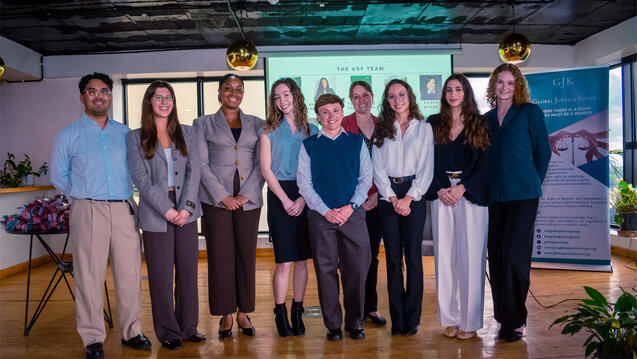
The Clinic filed 15 landmark individual communications against Saudi Arabia with the UN Committee on the Rights of Persons with Disabilities, documenting systematic abuse of Kenyan migrant domestic workers under the Kafala sponsorship system. Working in close partnership with Global Justice Kenya, students gathered 44 sworn survivor declarations during field research in Nairobi, establishing the first use of the CRPD Optional Protocol at this scale to challenge labor exploitation globally. The campaign anchors a broader multi-mechanism strategy including shadow reports, ILO complaints, special rapporteur submissions, and strategic advocacy. Students traveled to Nairobi and presented to 70+ Kenyan survivors of human trafficking on international human rights mechanisms and advocacy avenues. The Clinic’s campaign to highlight migrant justice within the UN disability framework has been highlighted on NPR’s local KQED station, and clinic graduate Meagan Kindrat’s opinion piece was featured in PassBlue, along with a piece in Just Security.
-
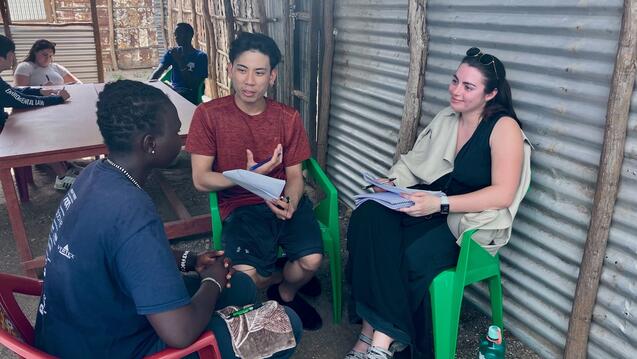
The Clinic partners with Elimisha Kakuma, a refugee-led organization founded by South Sudanese refugees Diing Manyang, Mary Maker, and Dudi Miabok, to advance freedom of movement and access to higher education in Kenya’s Kakuma refugee camp. Students traveled to Kakuma refugee camp in Northern Kenya to conduct interviews with refugee residents to document how restrictive movement policies and corrupt implementation block refugees from education, healthcare, and economic opportunities. The resulting report, “Human Rights in Limbo,” was launched on World Refugee Day and informs ongoing advocacy with UNHCR and the Kenyan government.
-
In partnership with Yalda Royan and Sisterhood and Solidarity, the Clinic has documented Taliban abuses against Afghan women, particularly Hazara women and those formerly in Afghanistan’s security forces now living in Iran and Pakistan. Students have organized advocacy convenings, drafted reports and op-eds, and are preparing submissions to UN Working Groups and special procedures to establish accountability for gender persecution. The work centers survivor testimony and international advocacy to expose the systematic criminalization of gender under Taliban rule.
The Clinic partnered with Atlantic Council and Sisterhood and Solidarity to bring around 50 Afghan women human rights defenders to Washington, DC for a convening focused on gender apartheid.
Clinic students also traveled with the Afghan delegation to participate in the Commission on the Status of Women at the UN headquarters in New York and met with six missions regarding resettlement pathways for Afghan Hazara women who worked in the security sector before the Taliban takeover.
-
In partnership with the Center for Justice and Accountability and Stanford Law’s International Human Rights Clinic, Clinic students monitored the trial of Michael Sang Correa in U.S. federal court in Colorado. Correa was charged with torture and conspiracy to torture under the Extraterritorial Torture Act for crimes allegedly committed in The Gambia under the Yahya Jammeh dictatorship. Students drafted daily monitoring reports shared with Gambian civil society and diaspora communities, ensuring survivors and the public receive accurate updates on this landmark accountability proceeding.
Publications
-
In partnership with refugee-led organizations, Clinic students documented the ways restrictions on refugee movement in Kenya undermine access to education, health care, livelihoods, and freedom of expression. Released on World Refugee Day 2026, the report contains recommendations for UNHCR, the Kenyan Department of Refugee Services, and other stakeholders.
-
Faculty and students interviewed Hazara women who served in Afghanistan’s security forces and have been targeted by the Taliban since they returned to power in 2021. First shared at the Commission on the Status of Women in March 2025 and then formally published in August 2025 to coincide with the fourth anniversary of the Taliban takeover, the report outlines steps that must be taken to ensure protection for these women.
Faculty
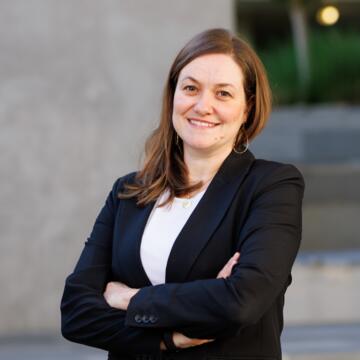
Professor Lindsay M. Harris
Professor Lindsay M. Harris is a professor of law and director of the International Human Rights Clinic. Her scholarship and clinical practice focus on international human rights mechanisms (UN treaty bodies, ILO, special procedures), refugee and asylum law, and clinical legal education pedagogy. She is co-author of Refugee Law and Policy (Carolina Academic Press, 6th ed.) and has published on secondary trauma and attorney wellbeing, crisis lawyering in immigration detention, and clinical pedagogy. She was the recipient of the AALS 2020 Elmer Fried Excellence in Teaching Award and the USF Provost’s Award for Innovation in Global Education (2024). Before joining USF Law, Professor Harris served as Associate Dean of Clinical and Experiential Programs at the University of the District of Columbia David A. Clarke School of Law where she directed the Immigration and Human Rights Clinic. She has also visited as Acting Director of the International Human Rights Law Clinic at American University and previously taught at Georgetown Law and George Mason.
Clinic Partners
The Clinic’s advocacy work is conducted in partnership with various organizations, including:
- Global Justice Kenya (GJK) — Nairobi-based organization supporting migrant domestic workers and other marginalized workers.
- Elimisha Kakuma — Refugee-led organization based in Kakuma Refugee Camp, Kenya, co-founded by Diing Manyang, Mary Maker, Dudi Miabok, and Deidre Hand.
- Sisterhood and Solidarity — Afghan women’s rights organization supporting women persecuted by the Taliban, founded by Yalda Royan.
- Center for Justice and Accountability — Organization supporting transitional justice and accountability for mass atrocities.
Discover Our Impact