San Francisco Advantage

Izaiah Tovar ’26 talks about neuroscience, medical research, and the importance of following your passion.
What’s your story?
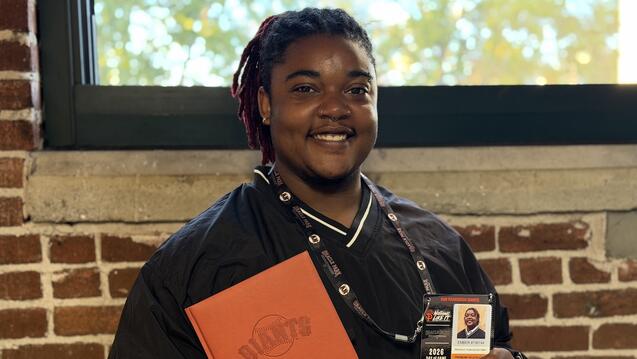
I graduated in May with a major in biology and with minors in neuroscience and chemistry. Starting in my sophomore year, I did research in the neurology department at UCSF. I didn’t know about the world of research when I first came to USF. Once I learned from my professors and peers, I reached out to different research labs at UCSF. I cold-emailed the principal investigators — they’re basically the people who run the labs. I said, “I’m a really motivated biology student at USF, and I really want to get into research. Do you have anything I could do as a volunteer to help you?” I emailed a graduate student who was getting a PhD at UCSF in neuroscience, and she said she’d love to have me help with her experiments. I did that for a year, then moved on to a different neuroscience lab for another year. Then when I was looking for a third position at UCSF, I spotted a position for a paid junior specialist. I applied last November and started work in March.
What sparked your interest in neuroscience?
I had an autoimmune disorder called Guillain-Barré syndrome. The body’s immune system attacks myelin, which is key to the neurons’ function in your body. I had that when I was 18, and I was paralyzed for three months. That was a life-changing moment for me. I expressed my interest in neuroscience to the Green Lab at UCSF. They study multiple sclerosis, a nervous system disorder similar to Guillain-Barré.
What are you doing now at UCSF?
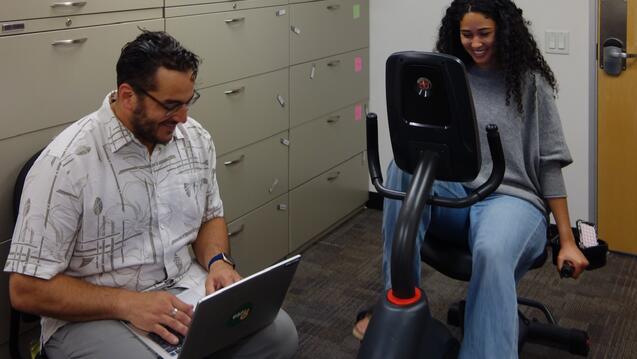
I work in the Green Lab, run by Dr. Ari Green. I help coordinate clinical research studies, where they’re testing a medication to see if it’ll induce remyelination, or reverse the effects of multiple sclerosis. I see patients, do various testing on them over long periods, collect that data, and see if we can find a remyelinating therapy. I’ve committed to UCSF for two years. In my second year there, I plan to apply to medical school.
What’s your career advice to students at USF?
Keep trying. I faced tons of rejection. I probably reached out in total to 100 labs and only got three yeses. All you need is a yes. The worst thing anyone can say is no, and that’s totally OK. You take it and move on. My biggest piece of advice would be to follow your interests. I was always interested in neuroscience. USF is beautiful because the classes are so small and intimate. Stay after class, go to office hours, talk to your professors. That’s what got me to where I am today. Christina Tzagarakis-Foster and James Sikes both taught classes that weren’t directly related to neuroscience — Professor Foster taught endocrinology and Professor Sikes taught developmental biology. But they showed me what it’s like to be passionate about a certain type of science. They’re just so passionate that they inspired me to further my own passion.