Come for Lunch, Stay for the Garden Escape
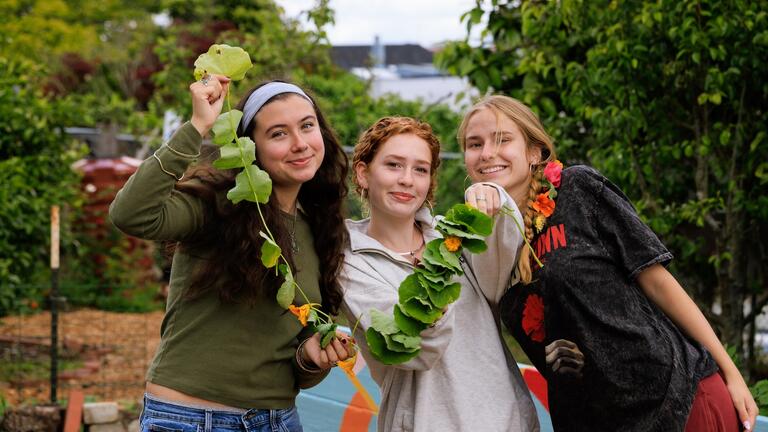
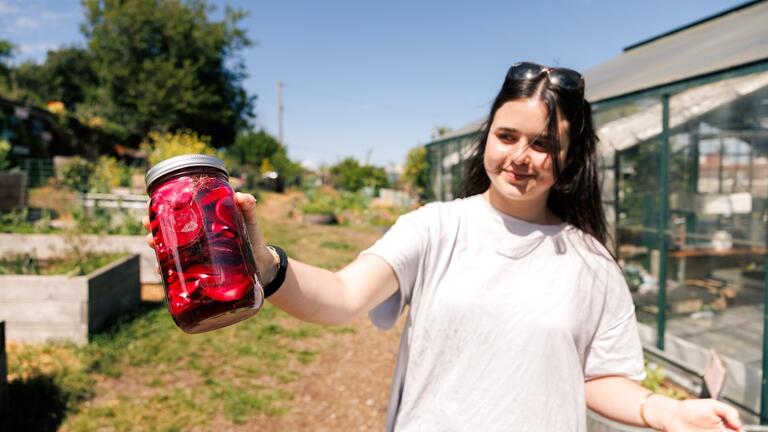
Forgot your lunch? Running short of funds? Stop by USF’s community garden at noon on any Thursday.
“Free lunch! Everyone is welcome — students, faculty, staff, neighbors,” said Melinda Stone, associate professor of environmental studies and coordinator of the urban agriculture program.
The garden — one-eighth of an acre just west of the School of Education building — has been an outdoor classroom and gathering place for 19 years. Students can engage as little or as much as they like, Stone says. “Stop by any time to relax and refresh. Or come to lunch on Thursdays, help with the harvest, take a class.”
Arz Abdelhadi ’26 first read about the garden on USF’s website. “When I moved here I was seeking outdoor time, so within a couple weeks of me living here, I needed the community garden,” he said. “The people there were really welcoming.”
He volunteered in the garden for a semester, and then Stone asked him to join as a research assistant.
“I find meaning here,” he said. “You can see the fruits of your labor. You’re not alienated from your work. It’s physically and spiritually fulfilling — and I’m a nursing major, not an environmental science major!”
Jade Haskins ’29, who is an environmental science major, first heard about the garden at the campus involvement fair. She stopped by on a harvest Thursday, and now shows up every week. “This garden is good for us and good for the land,” she said.
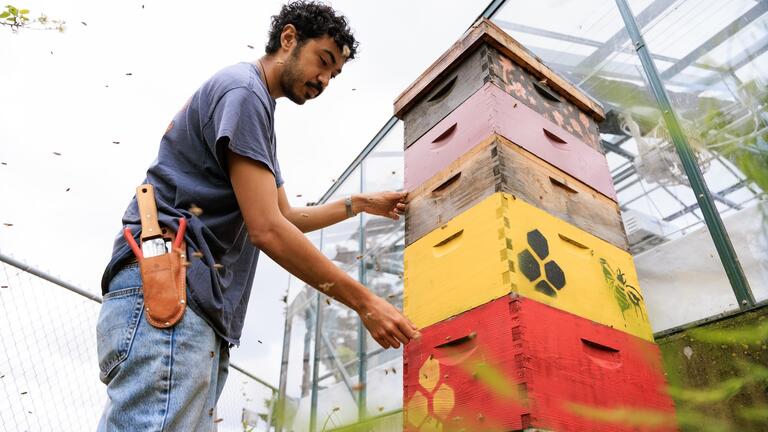
In the garden’s different courses, students serve lunch, plant seedlings, pull weeds, prune trees, feed vegetable scraps to the worms in the worm bin, and tend to the bees in the hive. And in the Community Garden Outreach course, students cook dinner from garden produce and serve it at the Homeless Youth Alliance on Haight Street.
The garden draws students from across the campus, Stone said. Architecture students have designed and built a greenhouse and a solar-panel system. Art students have made signs and murals.
“This whole garden is a community — the humans, the plants, the worms, the insects. It’s everything, together.”