USF Pre-College Program
Courses
Come to USF and take one of these college classes. You’ll receive a certificate of completion.
AI in Action: Turning Data Into Solutions
An in-person, immersive certificate program designed to introduce high school students to the fundamentals of AI and data science through hands-on, collaborative projects. The course emphasizes experiential learning, teamwork, and problem-solving using real-world datasets drawn from publicly available sources, including social impact and global challenge datasets. Students analyze authentic California environmental and health data, exploring issues relevant to their communities and state. Students work with industry-standard tools including Google Cloud Platform and modern generative AI technologies, gaining experience with the same platforms used by professional data scientists.
Students are guided through the complete data science workflow, including data exploration, cleaning, visualization, basic machine learning, and communicating results through formal presentations. Working in teams, participants tackle a datathon-style challenge that encourages critical thinking and creativity while building technical and analytical confidence. Students learn to leverage AI tools responsibly and ethically as part of their analytical process. The course culminates in team presentations where students showcase their findings and recommendations, creating portfolio-ready work that demonstrates their ability to translate data insights into actionable solutions. The course provides an accessible and supportive entry point for students curious about how data science is used to understand and address complex real-world problems.
-
Image
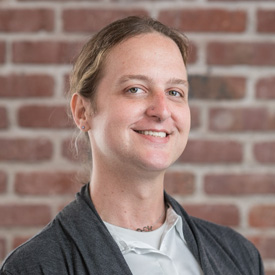
Georgia von Minden is an experienced data scientist with a foundation in mathematics, programming, and education. She focuses on leveraging modern machine learning and statistical methods to support data-driven decision-making within organizations serving marginalized communities. At the ACLU of Northern California, Georgia contributed to casework involving Fourth Amendment violations, developing data pipelines, analyzing behavioral patterns in unstructured data, and producing visualizations that informed attorneys and cross-functional teams. She holds a Master’s in Data Science and a Bachelor’s in Mathematics.
-
- Hands-on, project-based learning: Students learn data science by working in teams on real-world problems using authentic public datasets.
- Beginner-friendly and inclusive: Designed for high school students with no prior data science experience.
- End-to-end data science experience: Covers the full lifecycle from problem definition and data exploration to modeling and presentation.
- Collaborative datathon-style format: Students apply concepts in an immersive, challenge-driven environment that mirrors real-world analytics work.
- Responsible AI integration: Students learn to effectively and ethically use generative AI tools as part of their data science workflow, understanding both the capabilities and limitations of AI assistance in analysis, coding, and interpretation.
- Industry-standard cloud platform: Students gain hands-on experience with Google Cloud Platform and modern tools used in professional data science such as Looker and Vertex AI.
- Portfolio-ready outcomes: Final projects can be showcased for college applications or future STEM opportunities.
-
To enrich the hands-on curriculum, the program may incorporate one or more of the following experiential components:
-
Data scientists and analysts from industry, nonprofits, or academia discussing how they use data to solve real problems.
-
Early-career professionals or alumni sharing pathways into data science, college preparation tips, and project-based learning experiences. Researchers or faculty members presenting how student projects can evolve into academic or applied research.
-
Data lab experience: Visit a data science or research lab to see applied analytics in action, for example, Capgemini’s Applied Innovation Exchange.
-
Industry or nonprofit site visit (local): Observe how organizations use data for decision-making, social impact, or innovation. Candidate locations include:
-
EPA in San Francisco
-
EDF in San Francisco
-
BAERI in Mountain View
-
The Nature Conservancy
-
-
Sport Marketing & Sponsorships
Sport marketing and sponsorship is about getting and keeping the sport customer, who could be a participant, fan, sponsor, or broadcaster. Sport marketers build careers in one of the most exciting and impactful industries in the world, and understand what it takes to create memorable physical and online experiences that everyone wants to be at, and talk about. Sport marketers know the ways that sport can change the world for the better, and inspire individuals, communities, and nations.
This course will provide an introduction to the knowledge and skills needed to be a sport marketing and sponsorship professional, by examining sport fandom, branding, communications, event experiences, and sponsorship sales and activations. You will learn by working collaboratively on real-world issues with sport industry companies, by experiencing sports facilities behind-the-scenes, by analyzing innovative sport marketing and sponsorship examples, and by interacting with sport industry professionals.
-
Image
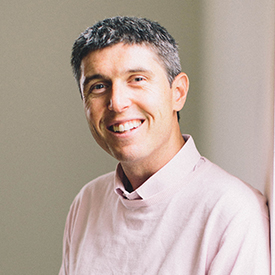
Dr. Michael Goldman is an award-winning sport marketing and sales professor, researcher, and advisor. From advising the MTN telecommunications group on leveraging their FIFA World Cup sponsorship, to researching sport tourism experience packages with the San Francisco Giants, training relationship managers at Barclays and Safaricom in Kenya, and developing sales skills workshops with the Los Angeles Clippers, Dr. Goldman has worked with students, managers, and clients to enhance their abilities to build strong brands and businesses.
Dr. Goldman is a Professor in the University of San Francisco’s Sport Management Master’s Program, and Associate Dean in the College of Arts & Sciences. He has assisted organizations as diverse as PepsiCo, World Rugby, Cricket South Africa, and the United Nations Development Program. He holds an Adjunct Faculty role with the Gordon Institute of Business Science in South Africa, and is on the Board of the Case Research Foundation. His peer-reviewed research has been published in, among others, the California Management Review, Management Decision, European Sport Management Quarterly, and International Journal of Sports Marketing & Sponsorship. He has addressed audiences around the world, and is a regular commentator on sport business issues in the media.
-
- Collaborate with your peers to solve real-world sport marketing and sponsorship challenges
- Gain first-hand experience visiting sports facilities and companies as an emerging professional, not just as a fan
- Research the behaviors and attitudes of a range of fans to create new knowledge
- Network directly with sport industry professionals to develop internship and career connections
-
- Visit to a Division 1 College athletic department or conference to learn more about NCAA-related marketing priorities
- Visit to a professional NBA, WNBA, MLB, NWSL, or NFL sport team to learn about sponsorship strategies
- An industry guest speaker from an innovative sport sponsor or sports technology start-up that engages customers through sport
- An esports and gaming visit or experience to understand local and global marketing
- A FIFA World Cup 2026 fan festival experience to learn about mega-event branding and management
Biotech Entrepreneurship Academy: Where Science Meets Business
Welcome to the BioEntrepreneurship Academy, a dynamic pre-college program for the next generation of innovators. This course plunges students into the exciting intersection of science and business that defines the biotechnology industry. Have you ever wondered how a scientific discovery in a lab becomes a life-saving medicine or a groundbreaking product? This academy provides the answer.
Students will learn the fundamentals of project management and business strategy by taking on the role of a biotech startup founder. Through an online bioentrepreneurship simulation (Startup Wars), teams will make advanced critical decisions in areas like project management, marketing, and finance, seeing the real-time impact of their choices on their vertical farming business success. A core component of this academy is also learning how to communicate ideas effectively. Students will enhance their storytelling techniques to transform data and business plans into compelling narratives. They will learn to craft a persuasive pitch for their simulated company proposal and develop a confident personal "elevator pitch" for college interviews and future internships. The course emphasizes biotech related hands-on learning, collaboration, communication, and creative problem-solving. Guest speakers from various biotech careers will provide invaluable real-world context, and excursions to local companies will bring the classroom concepts to life.
Students will conclude the course by presenting their startup's vision and journey, gaining a significant head start on their academic and career paths in STEM and business.
-
Image
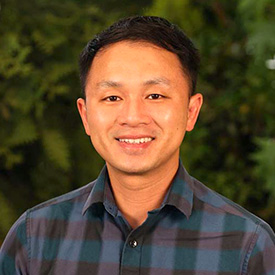
Luwei Xie is a dedicated educator and academic leader with a multifaceted background spanning biotechnology, business administration, and data analytics. He brings a wealth of practical and strategic expertise to his teaching roles at the University of San Francisco.
As the Program Director for Biotechnology Programs at USF, Mr. Xie provides strategic leadership for multiple graduate and undergraduate degrees, including the MS in Biotechnology and BS in Biotechnology/BioEntrepreneurship. He has a proven track record of building industry-aligned curricula and establishing robust partnerships with leading organizations such as Genentech, Tesla, NASA, MBC BioLabs, and Johnson & Johnson Innovation Labs. His efforts have significantly grown program applications and admissions, exceeding key performance targets.
In the classroom, Mr. Xie leverages his extensive industry experience to bridge theory and practice. He has instructed courses including Career Preparation Seminar (BTEC 601), Molecular Biology Graduate Seminar (BTEC 600), and the Academic Global Immersion (BTEC 619) as well as Expedition USF (USF101). His teaching focuses on preparing students for successful careers by emphasizing real-world skills in internship procurement, professional networking, and bio-entrepreneurship.
His professional background includes operational and product development management roles within the life sciences and technology sectors, with experience at biotechnology companies like BioGenex and Medika Therapeutics as well as public traded company for United States Securities and Exchange Commission (SEC) compliance, Access Newswire. Mr. Xie's academic credentials are equally robust, featuring an MBA and an MA in Asian Pacific Studies from the University of San Francisco, and an MS in Computer Information Systems from Boston University. He is currently a Doctor of Business Administration candidate with a concentration in Tech & AI at Edgewood University.
Combining deep industry knowledge with a passion for student development, Luwei Xie is committed to guiding the next generation of leaders in biotechnology and business.
-
- Hands-On Biotech Startup Simulation & Pitch Competition: Launch and run your own virtual biotech company, culminating in a final pitch to a panel of judges.
- Develop a Startup Toolkit: Build a foundational business plan and a compelling investor pitch deck for your biotech concept.
- Meet Industry Leaders: Engage with professionals from the San Francisco Bay Area's world-renowned biotech ecosystem.
- Master Foundational Tools: Gain introductory experience with key business modeling frameworks (e.g., Lean Canvas) and presentation tools to communicate your ideas effectively.
- Master the Art of the Pitch: Learn powerful storytelling techniques to craft and deliver compelling proposals and a personal "elevator pitch."
-
The final schedule will be confirmed closer to the program date based on company and professional availability. Examples of potential excursions and speaker affiliations may include:
- Melio Therapeutics, San Jose Site Visit led by Julia Wellons, Research Associate
- MBC Biolabs, San Francisco or San Carlos site visit
- Johnson & Johnson JLabs Incubator, South San Francisco site visit
- LinkedIn, San Francisco or Sunnyvale site visit
- Verily Life Sciences (formerly Google Life Sciences), South San Francisco site visit
- Meetings with current Biotech Alumni in the Bay Area and other experts in the field
Biochemistry of Aging: Protein Structure, Function, and Disease
This course explores how proteins change as they age and how modern artificial intelligence tools are transforming our ability to study these processes. Students will learn the fundamentals of protein structure and function, then investigate how chemical modifications accumulate over time and contribute to disease, tissue degeneration, and loss of cellular function. Using state-of-the-art AI tools like AlphaFold, students will visualize protein structures, model aging-related changes, and analyze how even small alterations can impact protein structure and function. Through hands-on computational projects, students will formulate and test hypotheses, compare wild-type and modified protein models, and learn to communicate scientific findings through posters and presentations. No prior coding or computational experience is required. This course blends biology, chemistry, and data-driven AI approaches to give students a modern view of how scientists can uncover the molecular mechanisms of aging.
-
Image
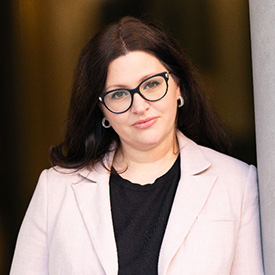
Aleksandra Dimitrijevic Stamenov received her B.S. and Ph.D. in Biochemistry from the Faculty of Chemistry, University of Belgrade, Serbia. For her thesis work she investigated activity and stability of microbial enzymes and their application in non aqueous catalysis. After graduate school she first completed a short training in proteomics and MALDI imaging mass spectrometry at INRA-Angers-Nantes Centre, France and then joined the lab of Dr. Dana Aswad at UC Irvine, for her postdoctoral work, where she studied protein aging and repair in mouse brain. She served as a lecturer at UC Merced from 2017-2021 where she taught Biochemistry and Cell Biology.
At USF, Aleksandra teaches General Chemistry and Biochemistry. Her research interests include aging and repair of microbial proteins as well as chemistry and biochemistry education research.
-
- Hands-on exploration of protein structure using modern visualization tools to understand how shape drives biological function.
- Introduction to aging-related protein chemistry, including oxidation, deamidation, aggregation, and their roles in health and disease.
- Use of cutting-edge AI tools, including AlphaFold, to predict and analyze protein structures with real scientific methods.
- In-silico experiments where students model aging-related amino-acid changes and examine their impact on local structure and stability.
- Data interpretation and scientific reasoning, including hypothesis generation, structural comparison, and evidence-based conclusions.
- Collaborative mini-research projects, giving students an authentic experience in computational biochemistry.
- Scientific communication practice, culminating in posters, presentations, or digital reports.
- Interdisciplinary learning, blending chemistry, biology, AI, and computational analysis in a single integrated course.
-
- At least one visit to a Bay Area company applying AI and AlphaFold-derived technologies in their R&D.
- Visits to Bay Area labs or research institutes studying aging and age-related diseases.
- Visits to biochemistry labs at USF. Guest speakers from Bay Area companies, research centers, and USF. Virtual excursion options:
- DeepMind Virtual Seminar on AlphaFold EMBL-EBI
- Virtual Protein Structure Workshops
- NIH/NIA (National Institute on Aging) webinar
- Virtual tour of the PDB (Protein Data Bank) and RCSB workshops
Program Contact
Amy Martin, precollege@mail.usfca.edu