Environmental Science, BS
Apply ecology, earth science, biology, and chemistry to real environmental problems using the entire Bay Area as your lab.
Why Environmental Science at USF?
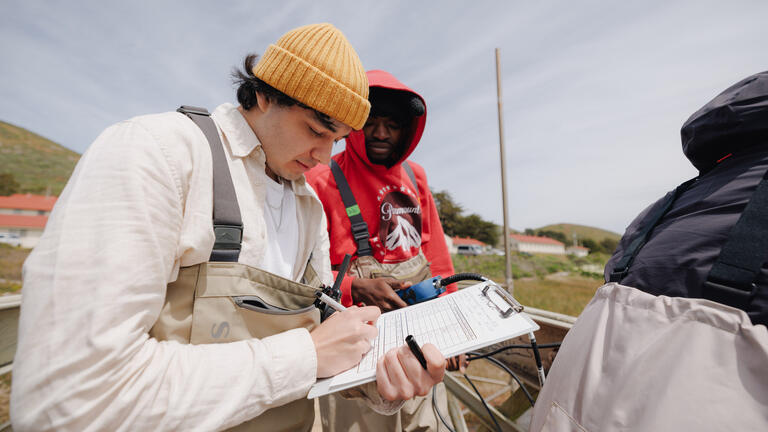
Learn environmental science through fieldwork and research with the National Park Service and other natural resource agencies across the Bay Area. Our Geospatial Analysis Lab (GsAL) puts mapping technologies in your hands to track climate change and tackle environmental issues like wildfire risk mitigation, food security, and forest carbon management. You’ll prepare for careers in government agencies, nonprofits, industry, and consulting, or for top graduate programs in the U.S. and around the world.
Are There Fieldwork Opportunities?
Students conduct fieldwork throughout the Bay Area and beyond, studying resource conservation, water quality, botany, geology, and aquatic ecosystems. Recent courses have taken students to Muir Woods, Point Reyes, Lake Merced, Yosemite National Park, Swanton Pacific Ranch, and the San Francisco Botanical Garden.
Explore our Facilities
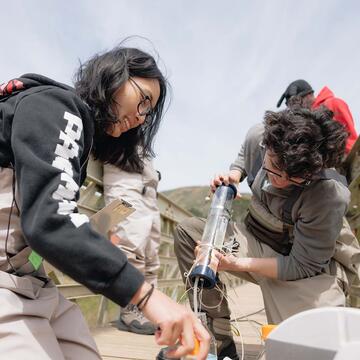
Learn through hands-on laboratory and field experiences supported by specialized equipment, analytical tools, and technologies used in environmental research. From analyzing environmental samples to mapping ecosystems with GIS, you’ll develop the skills to investigate environmental challenges.

Join the Horizon Collective
Starting in your first semester at USF, find your people, your purpose, and your profession by tackling real-world interdisciplinary projects in sustainability, AI, and health.
Read Our Stories

You May Also Be Interested In...
-
Learn methods of data collection, analysis, storage, and visualization for various forms of spatially referenced data.
-
Understand how policy affects all aspects of society. Evaluate how public policy is made and how to measure its impact.
-
Learn the science, economic, and political skills necessary to solve today's environmental challenges.