Campus Life
Each year, the School of Education’s Center for Humanizing Education and Research awards Freedom Dreaming mini-grants of up to $5,000 to students working with neighbors in local communities. Here, three grant winners talk about their work.

Danyale James ’27, EdD student in organization and leadership, is returning to her high school to run a program that engages and empowers Black girls.
I’m the founder of Crownz & College, a sisterhood for Black girls at McClymonds High School in Oakland. Crownz & College is the program I wish I’d had when I was a student at McClymonds. It tells you what you need to know before you go to college: How to show up. Keep a schedule. Meet deadlines. Stay healthy. Know your value. Keep the joy.
When I arrived at UC Berkeley as an undergraduate student, it was a shock. It’s a predominantly white institution. I didn’t know that when I applied; I just knew it was a top university and I wanted to go there.
Crownz & College is about Black love. If you look at your history, you see greatness. If you love your hair, you love yourself. If you value where you come from, you can take whatever comes next. College isn’t easy. These girls need to know that, so they don’t get blindsided like I did.
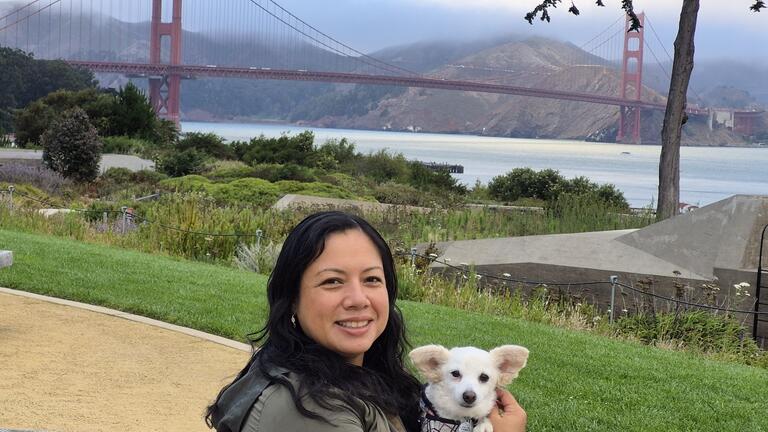
Lizette Alvarez ’28, EdD student in international and multicultural education, asks Latina elders how they care for themselves.
Did you know that wellness is a $6 trillion industry? And it’s extremely Eurocentric. But we have communities around the world that have been practicing wellness that doesn’t cost a dime. So, the idea behind the mini-grant is to document the stories of 14 Latina women here in California — seven in Richmond up north and seven in Huntington Park down south. These women, all older than 65, are doing superbly well with their own wellness practices. We interview them to hear their stories, and take photographs, too, and share them through social media.
This is research on a human scale. A lot of health-care research is actually dehumanizing. Researchers use numbers and charts and graphs. They don’t talk about individual people; they talk about “populations” or “markets.” They don’t meet with grandmothers; they do online surveys. If they see an abuela at all, they see her as a person on the margins. If she doesn’t use medicines or practices sold by Big Pharma, they’re not interested in her. I am. Meet Lupe, 89 years old, in her backyard garden in the Atchison Village housing project in Richmond. What’s her story? What does she grow in her garden? What does she do to care for herself? How does her spearmint tea help the women in her family come together? My project is called La Sabiduría de la Abuela–Amor Propio, or Grandma’s Wisdom, Self-Love. The whole idea is to give voice, via art and technology, to people who have been marginalized.
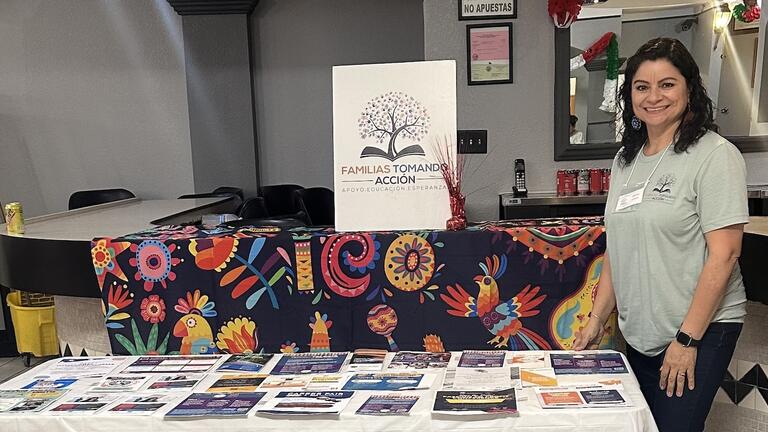
Edith Arias ’26, EdD candidate in organization and leadership, runs a nonprofit that serves Latinx families in South San Francisco.
In 2016, I was a college student when my children were in high school, so I started a support group in my children’s school called Padres en Acción, or Parents in Action, in South San Francisco, where I live. We met twice a month to talk about college, to think about college for our children, to share knowledge and experiences, to learn from each other that a college education is actually within reach. We spoke Spanish. We still do. We’re immigrants and children of immigrants. We live in two cultures.
In 2020, I started in the organization and leadership doctoral program at USF. From the first class on the first day, I’ve brought my support group to class. It’s relevant. We talk about it. In each class I learn from my professors and my classmates a little bit more about how to improve the American educational system and how to support Latinx students and their families in our community.
In 2020, I also founded a nonprofit in South San Francisco called Familias Tomando Acción. It evolved from Padres en Acción. We’re still a support group, but we’re no longer just parents talking about college; we’re whole families — infants, toddlers, cousins, grandparents — talking about college and about life. In the 2024–2025 school year, once a month we invited whole families to the Sociedad Mutualista Mexicana Morelos in South City for food, mariachi, folklórico. And tabling. Colleges come to talk about financial aid and other resources they offer. Community organizations talk about health care and mental health services. Adult education, immigration, legal aid, fears, opportunities — it’s whole families gathering in community, supporting each other.
One of our board members, in 2016 she was a mother of two high-school students and she was working as a bus person in a restaurant. She wasn’t even thinking about college. Then she found Padres en Acción. Her daughters applied to San Francisco State and California State University East Bay. They’re both in master’s programs now. And she went to school and earned a child development associate teacher permit. She joined the board of Familias Tomando Acción in 2021. She wants to give back.