USF Nursing Student Finds Her Voice in Advocacy
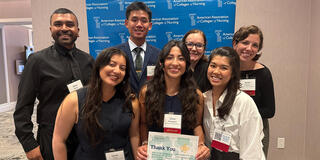
Attending the American Association of Colleges of Nursing (AACN) Policy Summit in Washington, D.C. was one of the most meaningful experiences of my nursing journey so far.
I feel grateful to have had the opportunity to travel to Washington, D.C. with six other students from the University of San Francisco, representing not only our school but also the future of the nursing profession. Being in a space where nursing voices were actively shaping national conversations was both humbling and empowering.
One concept that stayed with me throughout the summit was the paradox of “too little” and “too much” care. Before this experience, I often thought of healthcare disparities primarily in terms of lack of access. However, I learned that overtreatment can be just as harmful financially, physically, and emotionally. The idea of a cascade of tests that can turn someone from a patient into a “victim” challenged the way I think about care delivery. It reinforced the importance of advocating not just for more care, but for the right care–care that prioritizes value over volume. This shift from volume to value felt especially important in a system that often incentivizes doing more, rather than doing what is truly necessary and beneficial for the patient.
Another powerful takeaway was learning how to advocate effectively in spaces like Capitol Hill. I was struck by the idea that “numbers numb and stories tell.” While statistics are important, it is ultimately personal stories that create connection and urgency. This became real for me when speaking with legislative assistants. Initially, I felt intimidated, but I began to understand that my lived experiences and perspective as a nursing student carried weight. I also learned that effective advocacy requires preparation and empathy, especially when speaking to individuals who may not initially support your position. Taking the time to understand what they value and finding common ground can make advocacy more impactful and meaningful.
I was struck by the idea that ‘numbers numb and stories tell.’ While statistics are important, it is ultimately personal stories that create connection and urgency.
Discussing specific policies made the experience even more tangible. Learning about Title VIII reauthorization and the Nurse Faculty Shortage Reduction Act highlighted the urgency of addressing the nursing shortage from multiple angles. I was particularly struck by the focus on faculty recruitment and retention, and how the pay gap between academic and clinical roles contributes to this issue. It made me realize that strengthening the nursing workforce is not just about training more nurses, but also about supporting the educators who make that training possible.
I was also inspired by innovative ideas such as nurse-owned hospitals and nurse-run clinics, which reimagine the role of nurses as leaders and change-makers within the healthcare system. These models emphasize prevention, access, and patient-centered care, which reminds me that nursing has the potential to shape healthcare delivery in transformative ways.
One statement that deeply resonated with me was that there is not one person, from birth to death, who will not experience care from a nurse. This truth underscores the profound responsibility and influence that nurses hold. It also reinforced the importance of ensuring that nurses are supported, valued, and empowered through thoughtful policy and advocacy.
On a personal level, this experience pushed me outside of my comfort zone. I felt moments of anxiety stepping into unfamiliar spaces and conversations, but I learned that this discomfort is a natural part of growth. Advocacy, like nursing itself, requires courage and the willingness to speak up, even when it feels intimidating.
Reflecting on this experience, I now see advocacy as an integral part of my role as a future nurse. It is not separate from patient care, but deeply intertwined with it. Advocacy is about ensuring prevention and access for all patients, while also addressing the systemic issues that shape health outcomes.
The AACN Policy Summit did more than teach me about policy, it gave me a new perspective on my role in healthcare. I leave this experience with a deeper sense of purpose, a stronger voice, and immense gratitude for having been part of such an impactful opportunity. I am inspired to continue engaging in advocacy efforts and to carry these lessons with me as I grow into a nurse who not only provides care, but also works to improve the systems in which that care exists.