Professor Publishes a Study in the Journal of Advanced Nursing
Congratulations to Professor Beth K. Schwartz, Ph.D., RN, PHN, MAT. USF OC: Nursing Faculty, on her publication in the Journal of Advanced Nursing, which advances understanding of women's recovery from religious harm and can inspire future research and practice.
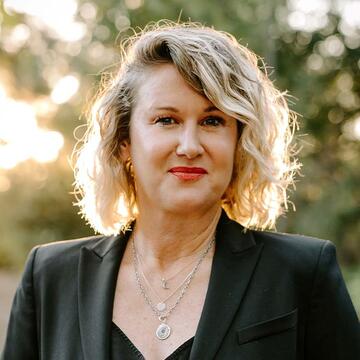
Schwartz, B. K., and P. H.Cone. 2026. “Discovering the Self: A Grounded Theory of Women's Recovery From Gender-Based Religious Harm.” Journal of Advanced Nursing. 1–15. https://doi.org/10.1111/jan.70599.
Dr. Schwartz shared:
At the heart of Jesuit education is a deceptively simple idea: that every person deserves to be cared for wholly — mind, body, and spirit. This principle, known as Cura Personalis, is not merely a motto. For me, it is the animating force behind both my teaching and my scholarship.
My research on Adverse Religious Experiences (AREs) and the Discovering Self Theory — recently published in the Journal of Advanced Nursing — emerged from this same conviction. When women who have experienced religious harm sit across from a nurse, a counselor, or a public health practitioner, they are not presenting a symptom. They are presenting a self — fragmented, silenced, and searching for restoration. My work asks: how do we meet them there?
As a member of USF's Mission Council, I have had the privilege of exploring how these questions live inside our institution as well. The Jesuit commitment to justice, to accompaniment, and to the formation of the whole person is not separate from the work of nursing science — it is its highest expression. I bring that conviction into every classroom, every mentorship conversation, and every page of my research.
To care for the whole person is to take seriously the social, spiritual, and structural forces that shape health. That is what Cura Personalis demands of us — and it is what nursing, at its best, delivers.
In a conversation with Dr. Schwartz about this accomplishment, she shared her journey, highlighting the resilience and perseverance that can serve as valuable lessons for colleagues and students navigating their own scholarly paths.
Before the Journal of Advanced Nursing said yes, two other journals said no.
I want to name that plainly, because academic culture rarely does. We celebrate acceptances. We post DOIs. We add lines to CVs. But the rejections — the ones that arrive in your inbox after months of waiting, after you have already imagined the work landing in readers' hands — those tend to stay private. I think that silence does a disservice to every scholar who has ever wondered whether the work is good enough, whether they are good enough.
This paper began as my doctoral dissertation at Azusa Pacific University, where I graduated summa cum laude and developed the Discovering Self Theory through years of listening to women's stories of religious harm and recovery. I believed in the work. But believing in your work does not make the editorial process gentle. The first rejection stung. The second one made me question the framing, the fit, the entire submission strategy.
What kept me moving was something I had learned from the very women whose voices shaped my theory: that the path from woundedness to wholeness is rarely linear, and that turning points rarely announce themselves in advance. Each rejection carried information. Each revision made the argument sharper, the contribution clearer, the manuscript stronger.
When the Journal of Advanced Nursing — one of the most rigorous nursing journals in the world — accepted the paper, it was not despite those two rejections. It was, in part, because of them.
I share this because I teach graduate students who are writing their first manuscripts and facing their first editorial decisions. I want them to know that persistence in scholarship is not stubbornness. It is fidelity — to the participants whose stories you carry, to the field you are trying to move, and to the kind of nurse-scholar you are becoming.