From Interest to Action
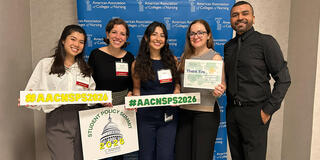
I intentionally attended the American Association of Colleges of Nursing Policy Summit because of my growing interest in how nursing intersects with health literacy and systemic change.
My focus has always been on enhancing patient comprehension and access to healthcare, but I realized that many obstacles, whether linked to equity, education, or resources, are influenced by factors well beyond direct patient care. I participated in the summit to deepen my understanding of policy-making processes and to learn about the role nurses play within them.
What I learned is that nurses are not merely participants in healthcare systems, they are vital voices shaping them. A key insight was understanding that advocacy isn't only for experienced policymakers; it is amplified by those of us directly involved in patient care and education. As nurses and nursing students, we offer genuine, human-centered insights, and sharing these perspectives intentionally makes a significant impact.
As nurses and nursing students, we offer genuine, human-centered insights, and sharing these perspectives intentionally makes a significant impact.
A key idea that resonated was the concept of the “policy window,” which originated in Public Policy. Recognizing that pivotal moments where political drive, public consciousness, and feasible solutions converge helped me view advocacy more strategically. It transformed my perspective from seeing advocacy as a distant or long-term effort to understanding the importance of being prepared — ready to clearly communicate priorities when the moment arises. This insight increased my sense of urgency and clarified how to prepare and remain actively involved.
It was equally powerful to see how open and receptive congressional staffers were to our insights. I anticipated these discussions would be more formal or detached, but they turned out to be collaborative and genuinely interested. Staffers posed thoughtful questions and appreciated how our clinical and educational backgrounds translate into tangible outcomes. This experience challenged the idea that these spaces are hard to access and emphasized that our voices are not just valid but essential.
Ultimately, the summit prompted me to shift from mere interest to taking active steps. It provided me with the vocabulary and confidence needed to participate in policy discussions and clarified that my dedication to health literacy and equitable care applies not only in patient interactions but also in advocacy arenas. Most importantly, it highlighted the significance of a unified nursing voice. While individual experiences are valuable, when combined into a cohesive message, they can become a powerful force for driving substantial change. I left with a heightened sense of responsibility to stay informed, advocate actively, and contribute to that collective voice, confident that nurses possess both the credibility and the opportunity to influence the future of healthcare.