From USF Classrooms to the World Cup Stage

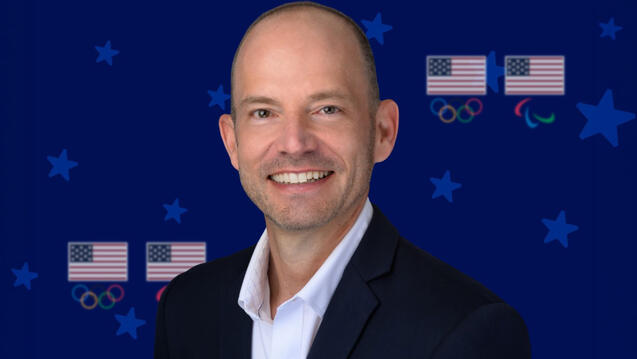
When the FIFA World Cup arrives in North America, millions of fans will pour into 16 host cities across the U.S., Canada, and Mexico. Behind the scenes of Coca-Cola’s massive tournament presence is USF Sport Management alum Ryan Morse ’15, now an Account Director at global agency 160over90.
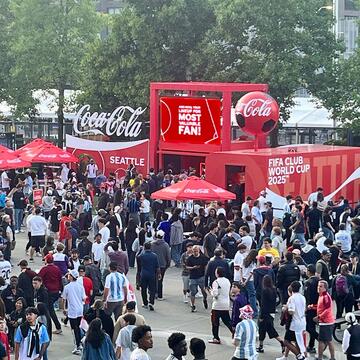
Morse is leading Coca-Cola’s experiential campaign for the 2026 World Cup, overseeing 32 live footprints across the FIFA Fan Festivals and Stadium Fan Experiences in every host city. “FIFA anticipates nearly 6.5 million fans attending the World Cup. Our goal is to create a memorable experience for every fan that only Coca-Cola can deliver through interactive touchpoints and seamless brand integrations," he explains. This works best when you can bring forward and tie in all aspects of experiential, from the activations themselves to expanding Coca-Cola’s reach through various talent, PR, and social content initiatives. “Every day I get to work and learn from some of the best and brightest who are experts in their field and help bring this experience to life,” he says.
Strategy, Culture, and the Anticipation for the 2026 FIFA World Cup
160over90, is an award winning global marketing agency specializing in sports and entertainment and recognized for its emphasis on cultural relevance. Morse’s role as an Account Director is to be both coach and quarterback amongst his team, while serving as the voice of the client within the agency, ensuring their work always delivers on a brand’s objectives. For Morse, this process begins with rolling up his sleeves and really trying to understand his clients and their brand at a deep level. When working with clients, he notes, “We do a lot of due diligence to understand the brand at its core; what are their goals, objectives, passions, reasons for investing in experiential?” Before anything is presented, our strategy and creative teams come together to craft a framework for a campaign, ensuring the ideas we present match our client's goals and objectives. Nothing gets pitched just because it sounds cool. “Everything is backed with strategic insights, quantitative and qualitative metrics, so it’s not just an idea for the sake of an idea, but something with real purpose,” he adds.
Morse is candid about the challenges of agency work. “It can be early morning, late nights, weekends, and lots and lots of layers of approvals, even for the smallest of details,” he says. Leading a team and acting as a liaison between brands and agencies has challenged him to keep evolving as a leader. “Managing people is difficult. Everyone’s different, and you’re trying to lean into their strengths, support their weaknesses, and help them grow as employees and as people.”
On the flip side, the highs can be massive. Before World Cup preparations ramped up, one of his proudest moments was leading T-Mobile’s MLB All-Star program when the game was hosted in Seattle, T-Mobile’s backyard. There was no question Seattle was ‘magenta’, from the moment fans arrived at the airport, looked up, looked down, T-Mobile was everywhere. Morse managed over 50 people from the 160over90 and T-Mobile teams. Taking a step back at the end of the week, he says, was surreal: “Holy crap, we did that. We saw ourselves throughout the Derby, All-Star Game, on commercials, industry articles, social media, T-Mobile was everywhere. It was really fulfilling to know I led that.”
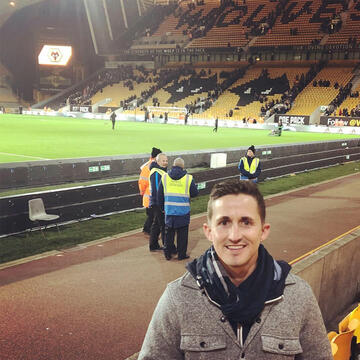
Looking ahead to 2026, Morse is excited about how the tournament will reshape how international fans experience North America and the United States. “North America is so diverse and unique,” he says. “You’re going to have fans from Paraguay, Algeria, Saudi Arabia landing in Kansas City, or Guadalajara and Toronto, likely cities they may have never planned to visit if it weren’t for their country playing there.”
He hopes we’ll hear stories of fans who “absolutely fell in love” with these cities, the way he fell in love with Wolverhampton, a city 3 hours outside of London, where he travelled for a Tottenham away match while on a Euro soccer trip.
For USF students and alumni, the World Cup also represents a huge entry point into the industry. “There will be vast opportunities and roles, from stadium and venue operations, credentials, and especially brand ambassadors,” he says. Brand ambassador roles, he notes, are a perfect on-ramp to a future career in sports sponsorship. As a brand ambassador, you will be tasked with being the face of the brand. Whether at the stadium or the FIFA Fan Festival, you’ll see firsthand how fans engage with a brand’s activation,” Morse explains.
There’s even a direct USF tie: 160over90 frequently staffs events through Two-Dots, a brand ambassador agency founded by USF alum Wayne Chuang. “It’s a really cool USF connection,” Morse says. “It’s a great way for students looking to make an imprint in the industry to get experience, meet people, and be part of something massive.”
How Data Changed the Sponsorship Conversation
Before 160over90, Morse worked at GumGum Sports, a company focused on quantifying sponsorship ROI, something the sports industry long lacked. GumGum helped solve a pain-point, historically, sports sponsorships were “hand-shake” deals, especially during COVID, as budgets began to tighten, we saw CMOs really begin to question the value of their sports sponsorships. GumGum helped answer that by creating ROI models and media equivalency values for sponsorship assets, essentially answering, What is a logo on the Dodgers’ outfield worth compared to a digital ad or TV spot?
“Brands could finally say, ‘We spent X on sports sponsorship and generated Y in media equivalency. This is what's working, and this is how it can get even better,” Morse explains. That data-first mindset now shapes his agency work as well. Recaps for clients go far beyond tracking just attendance and general feedback like “the event went well.” Morse and his team now look at technology to help track an array of metrics including first-party data, and how fans can be retargeted post-event. “We use geo-fencing, on-site surveys, and other inputs to help brands continue to communicate with fans long after the event ends.”

The New Tools of the Trade
Morse identifies one of the most deceptively simple yet impactful trends influencing experiential: QR codes. “The ease of access of QR codes has made a huge impact,” he says. “Fans are now trained to scan and interact with them. That makes it easier for us to tie experiences to that piece of technology in everyone’s pockets, encouraging fans to register and engage, and deliver something directly to their phone where they can share across social media.”
He also points to the rapid growth of women’s sports as both a passion point, and a wide-open space for brands. “There’s still a lot of uncharted territory in terms of how brands can differentiate themselves and tailor their approach in women’s sports,” he says. “It’s an ongoing conversation across our agency.”
A Career Built on Relationships—Starting at USF
For students looking to work in sponsorship, Morse’s advice is simple: build relationships. As a student in the Sport Management program, Morse attended classes at both San Francisco and Orange County campuses strategically so that he could “expand my network, meet new alumni, and make new connections.”
In fact, his first job at 160over90 traces directly back to an informational interview assignment completed in Dr. Cellini’s first class of the USF Sport Management program. “I connected with alumni and executives, stayed in touch through the program, and when I graduated, I checked back in with one of those contacts,” he recalls. “USF Sport Management alumna, Donna Lupton ‘05, happened to be hiring for an entry-level role at 160over90, and my name rose to the top because of that relationship.” Every job since then, he adds, has come through a connection, not a cold application.
His second piece of advice: get experience from as many angles as possible. “Even if you know you want to be in sales or partnerships, think about how you can build experience on the buyer side, or at a brand or agency. It helps you understand what the other side is looking for and how to navigate those conversations.” And finally, a habit he swears by himself is to “be patient, and ask questions!”
For Morse, success isn’t about perfection. In live events, Morse notes, something always goes sideways. He defines success by answering this question: “Did I do everything I could with the information I had to steer the team in the right direction?” The key is resolving issues, be prepared, stay calm, and recognize it's always a learning opportunity.
As Coca-Cola’s World Cup plans accelerate and cities prepare to welcome the world, Morse is clear about one thing: the work is demanding, but rewarding, and for those who are curious, relationship-driven, and willing to listen and learn, the opportunities have never been bigger.